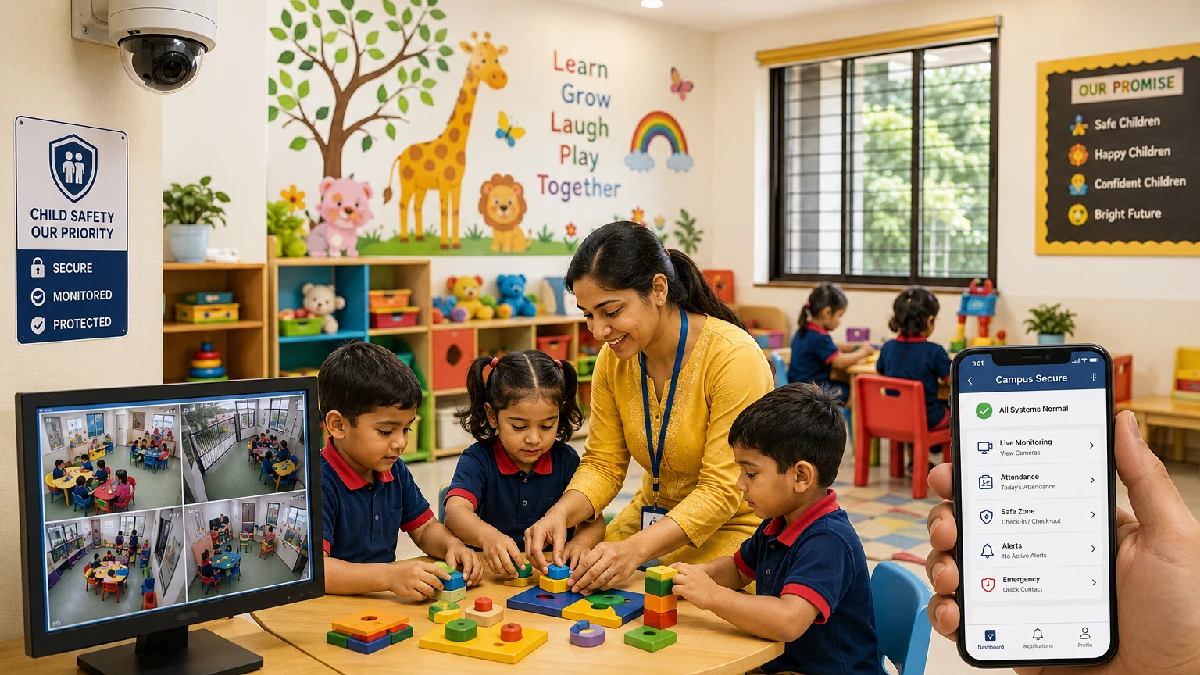
“Activity-based learning” has become one of the most-used phrases in Indian preschool marketing — and one of the least understood. For many schools it has been reduced to occasional craft projects and colouring sheets, while the rest of the day stays rote and worksheet-heavy. Done properly, activity-based learning is not a decoration on the timetable. It is the timetable.
What activity-based learning actually is
Activity-based learning means children learn concepts by doing, exploring, and playing rather than by listening and copying. A child learns counting by sorting objects, learns letters by tracing them in sand, learns about plants by growing one. The activity is not a break from learning — the activity is how the learning happens.
Where Indian preschools get it wrong
- Treating crafts as “activity time” while the rest of the day stays rote
- Activities with no clear learning objective behind them
- Pushing formal reading, writing, and exams far too early
- No structure — random activities instead of a developmental sequence
The problem is structure, not effort
Most preschools are not lazy — they are unstructured. Teachers improvise activities without a framework that connects each one to a specific developmental goal. The result is a day that looks busy but does not build skills in a deliberate sequence. Genuine activity-based learning needs a backbone: a curriculum that maps activities to outcomes, week by week.
How FLY implements it at scale
The FLY (Foundational Learning for Young Minds) curriculum is built so that activity-based learning is the default, not the exception. Every activity is tied to a clear objective across literacy, numeracy, motor skills, and social-emotional development, sequenced appropriately for each age group and aligned with NEP 2020. Teachers get lesson plans, materials, and training, so the quality does not depend on improvisation.
- Activities mapped to specific, age-appropriate learning objectives
- A structured weekly sequence instead of random craft time
- Hands-on materials and kits that make doing the default
- Teacher training so every classroom delivers it consistently
Why it matters for your school
Parents can tell the difference between a school where children are genuinely engaged and one where they are quietly drilled. Real activity-based learning produces happier children, visible progress, and the kind of word-of-mouth that fills seats. Getting it right is not about doing more crafts — it is about adopting a structured curriculum that makes meaningful, hands-on learning happen every single day.